"Poison-Soaked Pages: Les Chants de Maldoror"
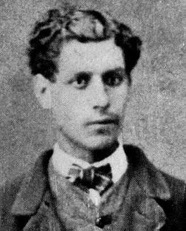
May it please God that the reader comes equipped with patience to forgive the following shortcomings. It’s customary when appraising a writer and their work to sketch out a few biographical details, to explain their personality and to mention a few friends and contemporaries. Well let me tell you right now that in the two extant photos of Isidore Ducasse we see a dark, slightly haunted-looking young man of fastidious appearance, neatly bow-tied and sporting the merest hint of a moustache. Born in the Uruguayan city of Montevideo and schooled in Paris, he wrote Les Chants de Maldoror between 1868 and 1869 pseudonymously as the Comte de Lautréamont, a handle he took from a popular gothic novel of the time. He would die in his domicile in 1870 aged 24 and on his death certificate “no further information” was given. That’s really all. His translator Paul Knight notes, “His life and his death are utterly consistent in their mysteriousness and impenetrability.”
After its first publication in the original 1868 edition, Les Chants de Maldoror had lain unread and neglected for many years. A chance discovery by the surrealists in the 1920s led the movement’s founder André Breton to describe the book as “the expression of a total revelation that seems to exceed human possibility”, and its influence has run like a black thread through culture’s tapestry ever since. The book has been described as unreadable, with numerous scenes of sadistic violence and with its central character Maldoror appearing as an unrepentant child murderer, a master of disguise and the sadistic shapeshifting incarnation of pure evil. There’s no plot in the conventional sense, as the book is an extended prose poem written in a variety of literary registers that contain all sorts of digressions, asides and provocations. The cast includes hermaphrodites, whores, children and gravediggers as the book rages vehemently against God, the human race, the novel and the reader.
Despite all this, over the years it has inspired artists, writers, filmmakers and musicians alike. One early reprint was illustrated by the French Symbolist painter Odilon Redon, another by Salvador Dalí whose delicate black etchings describe the story’s central characters made ambiguous through their abstraction and formal disintegration. A 1920 sculpture by Man Ray, The Enigma of Isidore Ducasse, is based on a celebrated line from Les Chants describing the character Manfred being “as handsome as the chance juxtaposition of a sewing machine and an umbrella on a dissecting table”. The artist wrapped a sewing machine up in wool and tied it with rope in tribute to the titular simile. The underground filmmaker Kenneth Anger began his attempt at an ambitious two-hour adaptation in 1951 but soon ran into problems. “The people who called themselves ‘surrealists’ were furious – this group of punks threatened me – they didn’t want a Yank messing around with their sacred text. I just told them to go to hell!” The few completed sections of the film are held in the Cinémathèque Française archive with their exact whereabouts unknown, and the project was eventually abandoned due to lack of funds. Since the 1980s the book has been referenced by experimental musicians such as Nurse With Wound, Current 93 and Coil, and has inspired lyrics for the goth bands Bauhaus and Skinny Puppy, while the noise act Maldoror comprises the Japanese musician Merzbow and the ex-Faith No More vocalist Mike Patton.
What unites all these disparate Lautréamont-affiliated projects is a willingness to go beyond conventional structure, combined with an acceptance of dissonance and noise, of the readymade and of chance as integral parts of the creative process. What must also act as a significant source of inspiration is the mystique surrounding the book’s elusive creator. As Ducasse himself wrote in the epigrammatic companion volume Poésies, “I will leave no memoirs”, and in Maldoror, “I know my annihilation will be complete.” To this day a plaque at the site of Ducasse’s death quotes from Maldoror: “Who is opening the door of my funeral chamber? I had said no one was to enter. Whoever you are, go away.”